

Caring for Your Little Sap
Learn the essentials of planting and growing your Little Sap and get answers to common questions.
Tree Planting Basics
Little Saps are evergreen trees and cannot survive indoors. They need a new outdoor home as soon as possible, either in a pot for a temporary home or directly in the ground. Fresh air, sunlight, water, and changing seasons will help your Little Sap thrive. Here are planting instructions for each gift type.
-
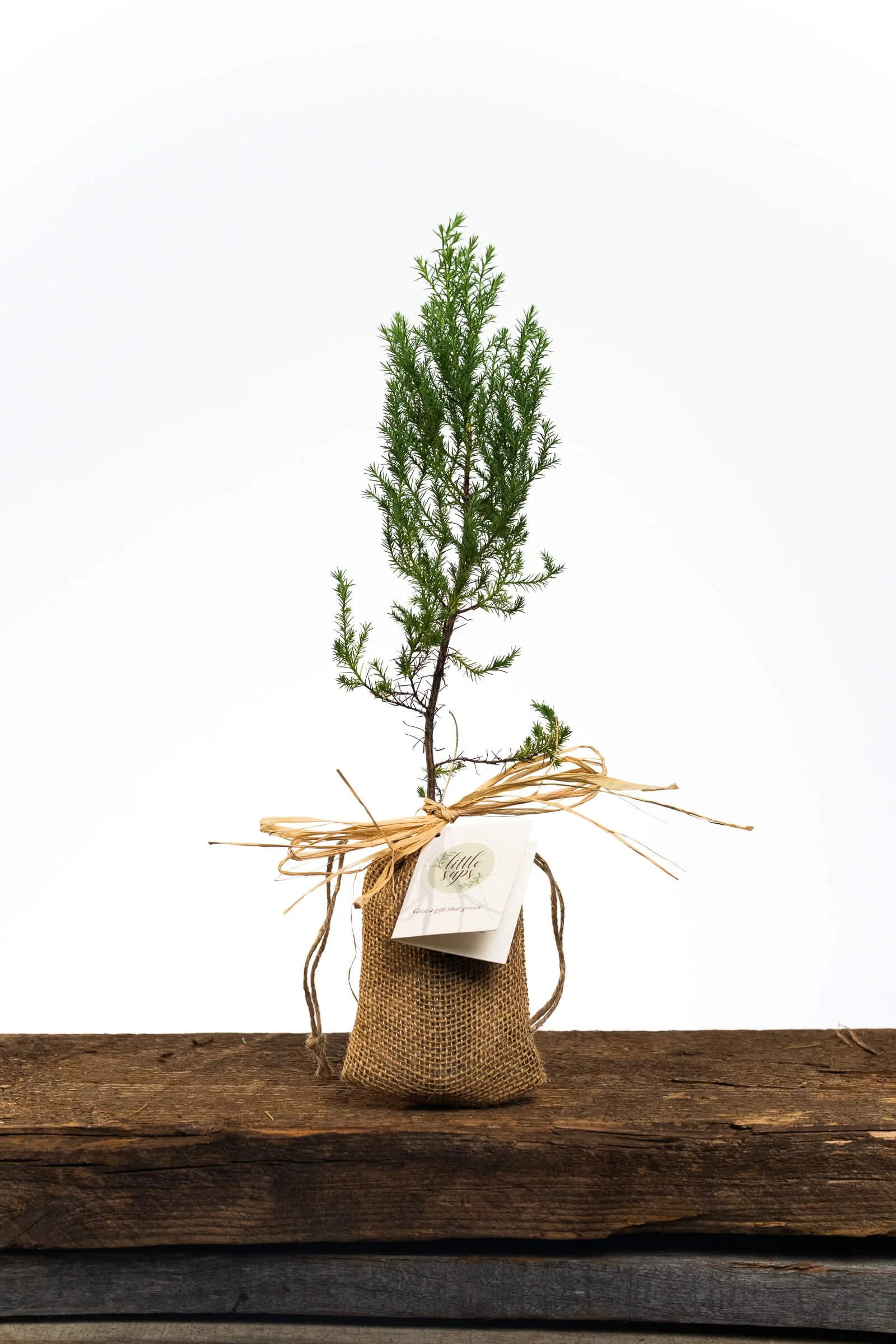
If your tree comes in a burlap or linen bag:
Transfer it to a planter with drainage or into the ground right away. Use a soil mix that supports drainage: ½ potting soil (ideally with slow-release fertilizer) and ½ pine bark mulch.
-
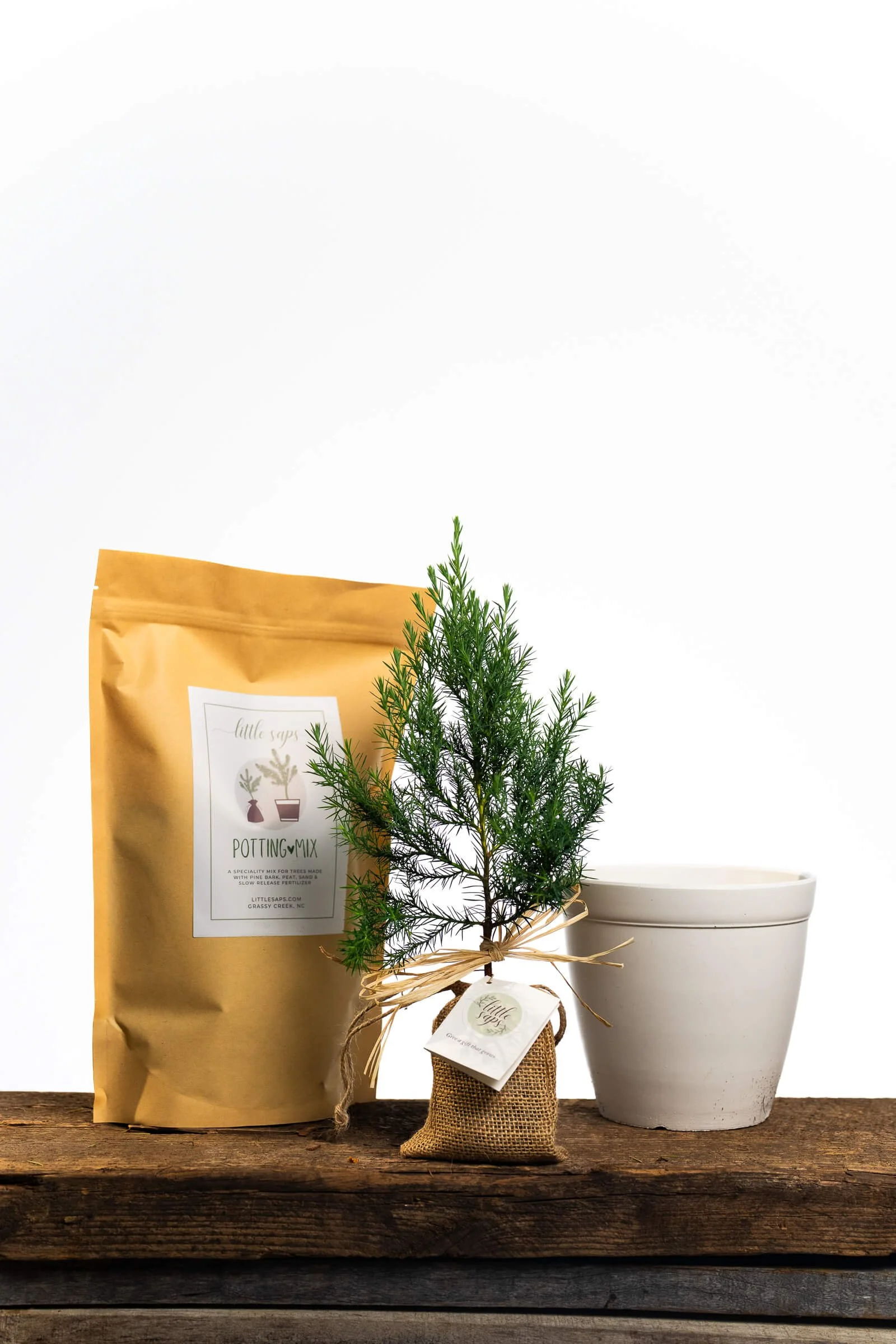
If your tree comes with a planting kit (planter and mulch + soil mix):
Transfer the sapling from the bag into the provided planter using the Little Saps mulch + soil mix, or plant it directly in the ground.
-
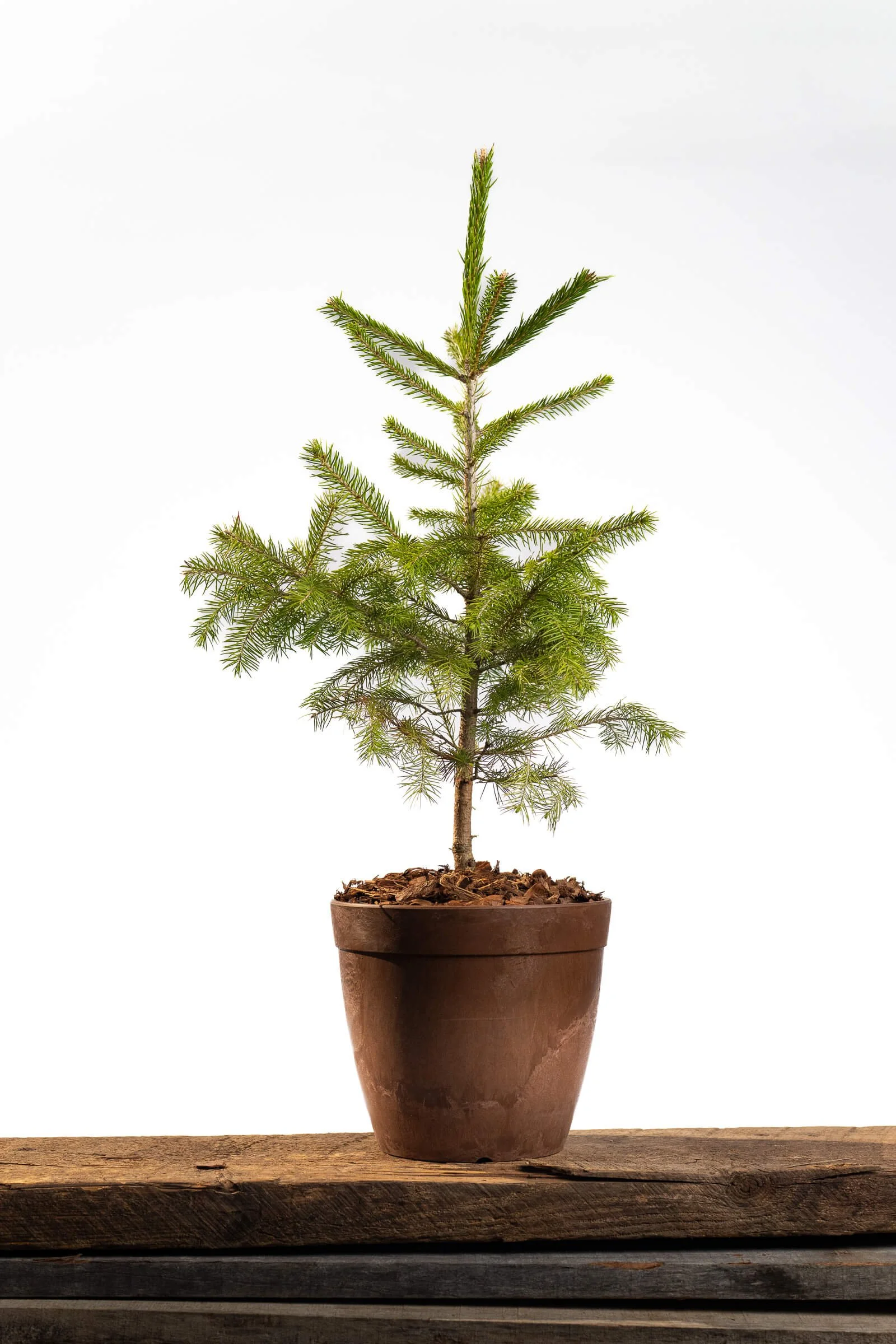
If your tree comes pre-potted in a planter:
It can stay in that planter outdoors for 1–2 years before being transplanted to a larger container or planted directly in the ground.
Caring as it Grows
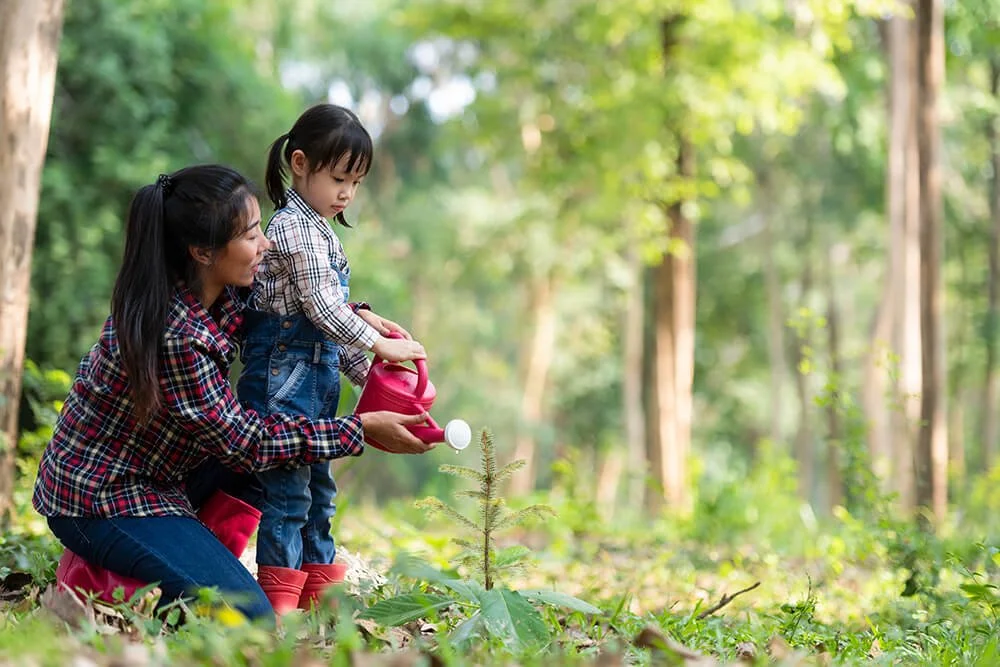
Your Little Sap will grow and change with the seasons. Some evergreens bronze in winter and then return to bright green in spring. Keep soil moist but not soggy, protect young trees in extreme weather, and remember that your tree will eventually need a larger planter or a permanent home in the ground within a few years.
Want to learn more about your specific tree variety? Visit our Tree Types page.
Frequently Asked Questions
-
A good rule of thumb is to water when you first plant it and then during dry spells. Soil should be slightly moist, but not soggy.
-
Not necessarily. Many evergreen varieties bronze or fade in winter, then green up in spring. All trees need a natural dormancy period to stay healthy.
-
No. Little Saps are outdoor trees and need fresh air, light, and changing seasons. You can display your tree indoors for up to 5 days, but then it must be moved outside.
-
Choose one with drainage holes. Around 1 gallon works for saplings 12–18 inches tall. Go larger if your sapling is bigger. Avoid oversized planters, which can overwhelm the root system when the soil is wet and cause root rot.
-
Repot every 1–2 years into a slightly larger planter so roots have room to grow. On average, Little Saps need a permanent home in the ground within 3–5 years. When you transplant, choose a soil mix with slow release fertilizer or add in your own.
-
Use a mix that supports drainage: ½ potting soil (ideally with slow-release fertilizer) and ½ pine bark mulch. Straight potting soil holds too much moisture for tree roots.
-
Plant so the top of the root plug is level with or just below the mulch and soil surface. Keep the soil no more than 1 inch below the rim of the planter.
-
Keep it outside in a sunny, protected spot year-round, even in winter.
-
It may be experiencing stress. Water deeply, check soil drainage, and avoid fertilizer until it adjusts. If you are concerned, reach out. Our team is here to help, and your Little Sap is backed by our 30-day replacement promise.
-
Plant in spring, summer, or fall when the soil is not frozen. Choose a sunny spot with room to grow. Dig a hole about twice the size of the root plug and plant so the top of the root plug is level with or just below the soil surface. Water well and mulch around the base, keeping mulch away from the trunk. If your Little Sap is smaller than 18 inches, let it grow in a planter first before moving it into the ground.
-
Young trees are remarkably hardy when they're planted in the right climate, but a little preparation can help them through their first winters.
Mulch the root zone. Add 2–4 inches of pine bark, wood chips, or another organic mulch around the tree to help insulate its developing root system and retain moisture. Keep mulch a few inches away from the trunk rather than piling it against the bark.
Don't let it go into winter dry. Continue watering during dry fall weather until the ground freezes. Evergreens continue to lose moisture through their needles during winter, so adequate soil moisture going into the season can help prevent winter drying and browning.
Protect young trees from deer. If deer are common in your area, consider placing a wire cage around your tree. Young trees can be damaged by both browsing and rubbing. And don't remove the cage too quickly in spring—the tender buds and fresh new growth that emerge as the tree breaks dormancy can be especially tempting to deer.
Skip late-season fertilizer. As winter approaches, you don't want to encourage tender new growth. Allow your tree to naturally harden off and enter dormancy.
Don't assume your tree needs to be covered. Cold weather is a normal part of an evergreen tree's life cycle. If you've selected a variety appropriate for your USDA hardiness zone and planted it correctly, it generally doesn't need to be bundled up for winter. Proper planting, moisture, mulch, and protection from wildlife are much more important.
We want every Little Sap to thrive. If your tree is not doing well within 30 days and our team cannot help, we will send you a new one.